Buying guide
How to Choose a Perfume Bottle: A Practical Buyer's Guide
Choose a bottle that fits the fragrance, the retail price and the production run. Here is the practical order in which to make those decisions.
Get a Quote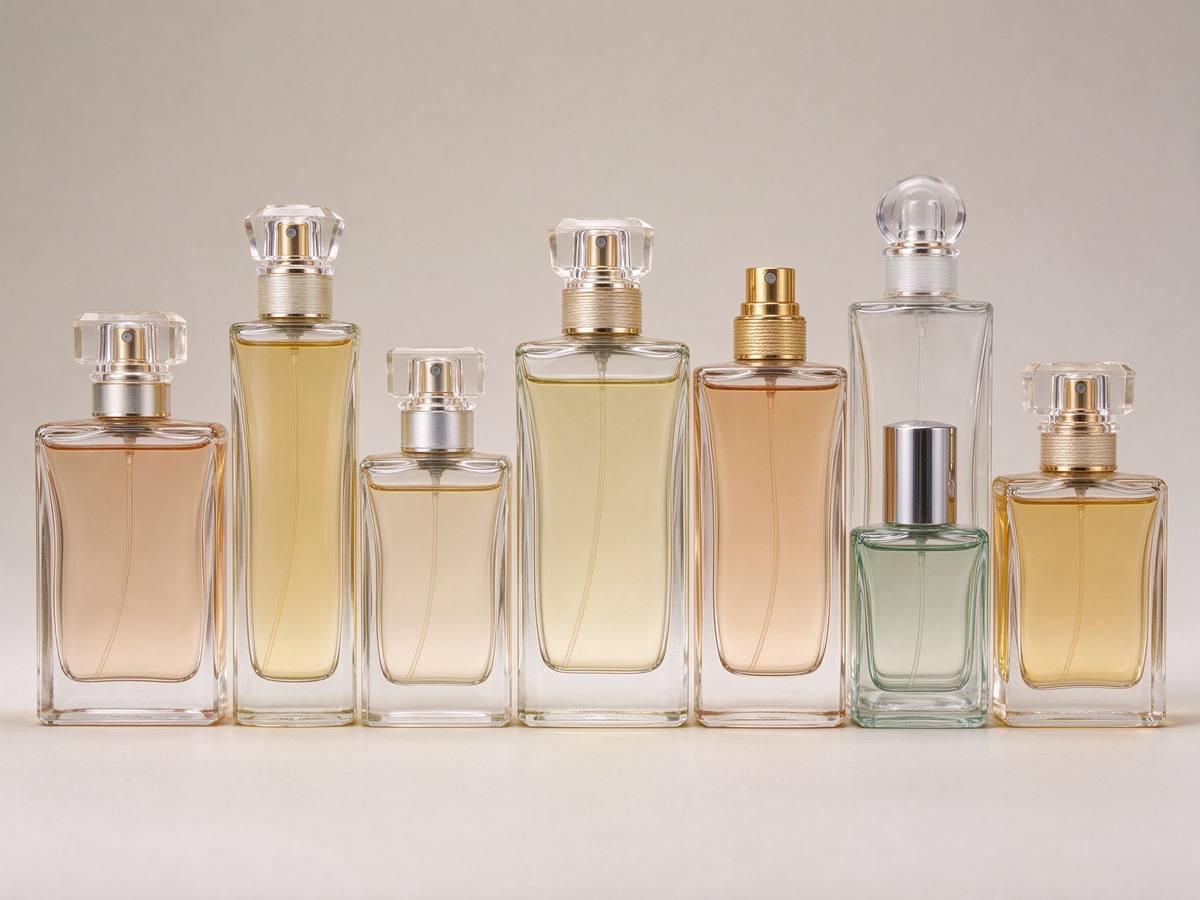
1. Start with capacity and price point
The bottle is usually chosen after the fragrance and its price position. A 30 or 50 ml bottle is the most common flagship for eau de parfum, 100 ml suits eau de toilette and many men's lines, and 10–15 ml is used for travel, samples and discovery. Confirm the capacity early because it determines the mold, carton and shipping weight.
2. Choose a shape that matches the brand
Square bottles read modern and give a large face for branding; round and oval bottles feel soft and classic; flat or flask bottles suit men's and pocket formats; novelty and sculptural bottles are used by niche and statement lines. You do not need a custom mold to start — an existing mold can be decorated and color-coated to look proprietary.
- Square: modern, structured, large branding area
- Round / oval: soft, classic, balanced
- Flat / flask: men's, pocket, travel
- Novelty: niche, artistic, limited edition
3. Decide the finish and decoration
Clear glass is the lowest cost, but decoration carries the brand. Common choices are screen printing for logos, hot foil for metallic accents, spray coating for a Pantone color, frosting for a soft matte surface, and labels for low-volume or highly detailed artwork. Methods can be combined, for example a sprayed bottle with foil and a weighted cap.
4. Match the cap and pump
The cap has a disproportionate effect on perceived quality. Metal and weighted caps feel premium, wood suits natural and niche lines, and color-matched caps keep the product coordinated. Confirm the pump fits the neck and gives a consistent fine mist, and that the cap seals properly.
5. Plan MOQ, sampling and lead time
Stock bottles generally start around 3,000 pieces, custom decoration between 1,000 and 3,000, and a new custom mold around 10,000. Always approve a physical sample before the full order, and allow roughly 7–15 days for stock and 25–40 days for custom production.
Use the planning tools
Our bottle selector, quote calculator and decoration cost estimator turn these decisions into a shortlist and an indicative price in minutes.